Cables, clutter, reflections — remove the right distractions and buyers focus on the space. Not more editing; the right editing.
Object Removal Is Not Just "Making It Prettier"
Buyers scan images quickly. A trailing cable, a bin, a reflection in a mirror — each pulls attention away from the space: size, light, layout. Object removal keeps focus on the property. Done well, rooms feel clearer; done poorly, patched walls look edited.
What Is Usually Worth Removing
- Cables and power strips — the most common, highest-impact clean-up
- Temporary clutter — boxes, cleaning products, personal items (with owner consent)
- Mirror and glass reflections — photographer, flash, equipment
- Floor marks or harsh glare — light cleanup without changing material texture
- Signage or number plates — common on externals; subject to privacy policy
What to Leave In Frame
- Structural features — beams, sills, existing finishes buyers will see in person
- View elements — real outlook, especially harbour or mountain vistas
- Built-in value — fitted kitchens and wardrobes are selling points
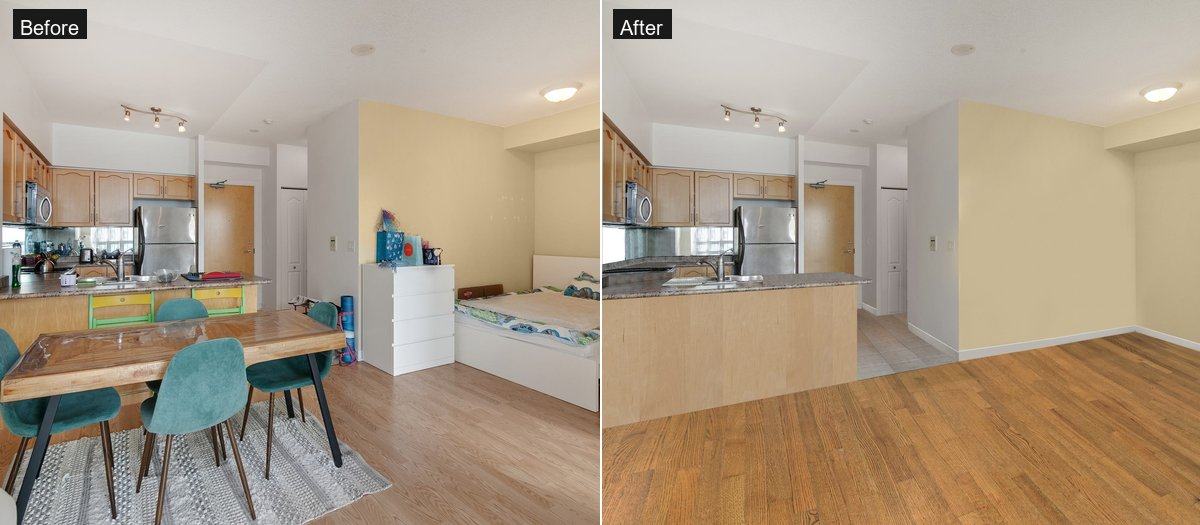
How This Differs from Virtual Staging
Object removal is subtraction — clearing what should not be in frame. Virtual staging is addition — furnishing an empty room to help buyers imagine use. Both can combine; the brief should separate them. See retouching services.
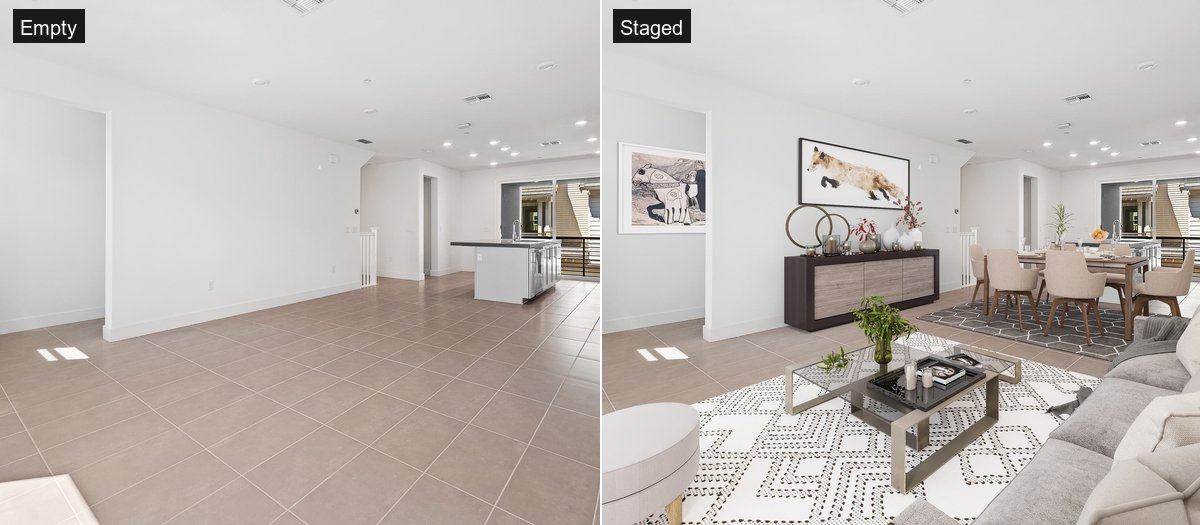
How Listd Handles It
Standard post-production includes light distraction removal. Major object removal, complex reflections, and virtual staging are quoted per image. Full-service shoot-and-retouch means the team knows on site what to avoid and what to fix in post — fewer revision rounds.
Clear the frame. Keep the space.
Object removal, sky work, and virtual staging — quoted per project; smoother as full-service.