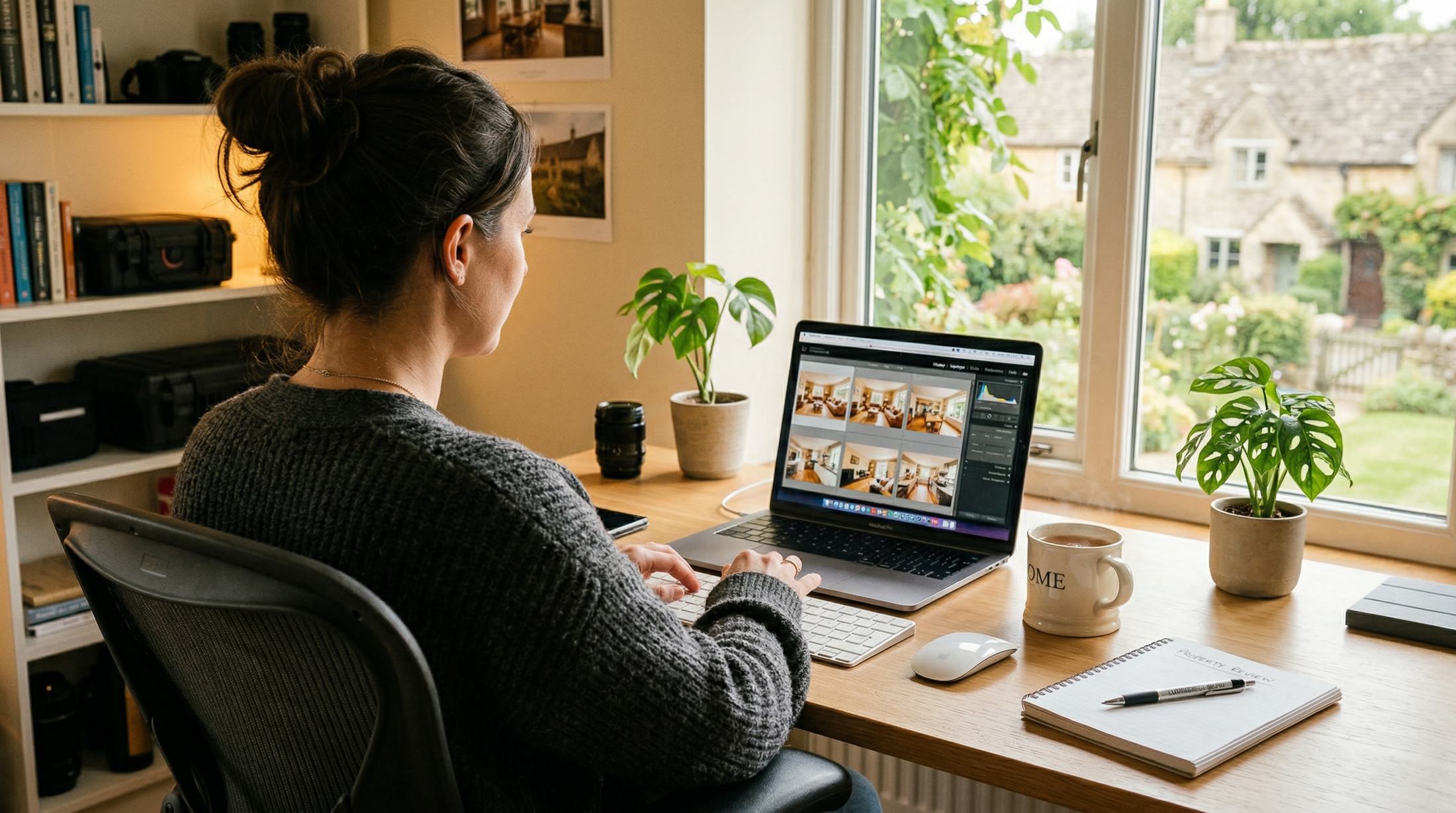
After a full day of shoots — two, sometimes three properties — you sit down at your desk somewhere around 7pm. The cards are ingested. The files are sorted. And ahead of you is three to four hours of editing: HDR blending, colour grading, perspective correction, the occasional sky swap. If the shoots ran long, it is closer to midnight before you are done. This is not a bad day. This is a Tuesday.
UK property photographers are a familiar example here: for many of them, that nightly editing block is no longer something they accept as part of the job. They outsource property photo editing to a studio in Hong Kong — overnight — and wake up to a completed batch ready for delivery. The mechanics of why this works are straightforward, and worth understanding properly.
The Time Zone Advantage
Hong Kong operates 7 to 8 hours ahead of the UK (GMT+8, with no daylight saving adjustment). That gap is not a complication. For overnight turnaround, it is the entire point.
When you finish your last shoot at 5:30pm and upload your batch by 6pm, it is already 1am or 2am in Hong Kong. A studio built around overnight production — editors working through the Hong Kong night — can process your files while you sleep and have them ready before your alarm goes off. By 9am UK time, your edited images are waiting.
This is a straightforward consequence of geography, not a marketing promise. The time difference creates a natural production window that does not exist if your editing partner is in the same time zone. Most UK estate agents expect photos within 24 hours of the shoot — often by the following morning — to keep the listing timeline on track. For photographers shooting multiple properties a day, that window is tight. You shoot today, you deliver tomorrow morning. That is a reliable workflow, not an aspirational one.
What Consistent Overnight Editing Actually Looks Like
The process is simpler than most photographers expect the first time they try it.
You finish your shoot, cull the selects, and upload the raw files to a shared folder — Dropbox, Google Drive, WeTransfer, or whatever you already use. Alongside the files, you include a brief set of style notes: your preferred brightness, tone preferences, whether you want natural or enhanced sky, anything specific about that property. If you have worked with the studio before, they already have your style guide on file. The notes are a brief reminder, not a lesson.
The editors process each image from raw: HDR blending from your bracketed exposures, colour correction to match your reference, perspective correction to bring verticals in line, sky replacement where specified. When you open your inbox the next morning, the images are there. If something needs adjustment, you flag it. A competent studio will turn revisions around within the same day.
For a detailed breakdown of what the editing process involves technically, see Property Photo Retouching: What Buyers Actually Respond To.
Quality and Style Consistency
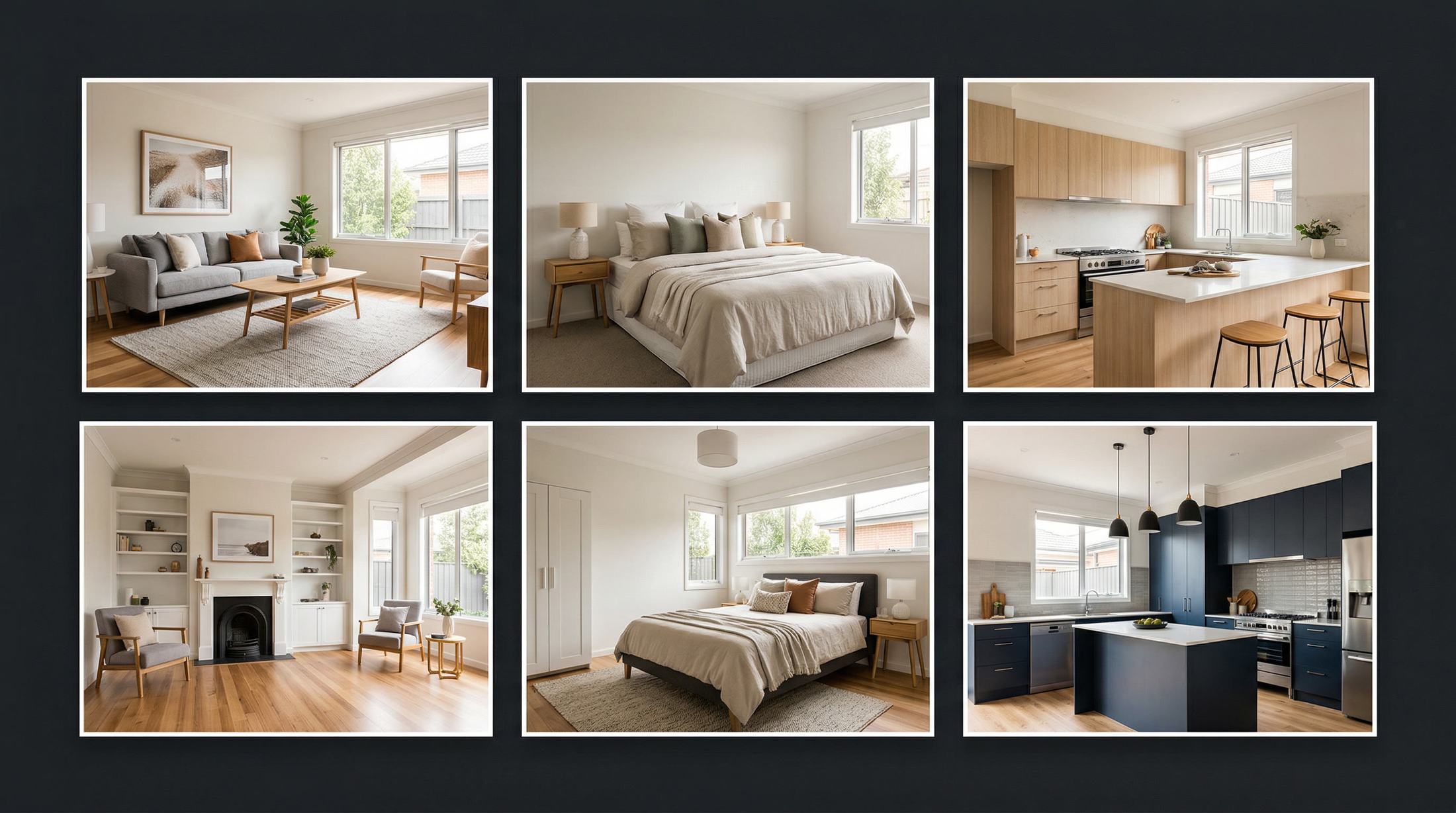
The most common concern photographers raise when they first consider outsourcing is consistency. Editing 50 images from a single property and having them look like they came from one hand — same brightness balance, same colour temperature, same treatment of shadows and highlights — is not trivial. It is where a lot of generic batch-processing services fall short.
The difference between good outsourcing and generic batch processing is a style guide. Not a vague description — a properly documented reference: your preferred colour profile, sample images representing your standard output across different property types, and clear notes on what you will and will not accept.
A studio worth working with will build that reference into their process from the first batch you send. Speed does not require sacrificing consistency. It requires a studio with a clear, documented understanding of your visual style — and the workflow discipline to apply it at scale.
The Economics
For photographers who primarily serve the UK (or any market with similar next-morning delivery pressure), the economic argument for outsourcing edits is not about the invoice line for retouching. It is about the value of your time.
If editing 30 images takes you three hours, those are three hours you are not shooting, not prospecting, not managing your business, and not resting. The question is not "what does outsourcing cost?" but "what does three hours of your time cost, and what else could you do with it?"
A photographer who frees up an evening can fit one additional shoot into the next day without sacrificing sleep or next-morning delivery. One additional shoot per week adds up across a year. That is the calculation worth making.
There is also a less visible cost to consider: editing fatigue. Editing after a full day of shooting is not the same as editing when you are fresh. The decisions you make at 11pm are not always the decisions you would stand behind the next morning. Consistency of output is harder to maintain when you are tired. Outsourcing removes that variable.
What to Look For in an Editing Partner
If you are evaluating any editing service, these are the criteria worth applying. The checklist below covers the practical considerations that separate a reliable partner from a frustrating one.
- Turnaround guarantee — Is the overnight delivery window documented and guaranteed, or is it approximate? What happens if they miss it?
- Revision policy — How many revision rounds are included? What counts as a revision versus a new edit? Is there a clear process for flagging issues?
- NDA and confidentiality — Property images often contain client addresses, agent branding, and unpublished listing details. Does the studio have a standard NDA?
- Style consistency — Can they demonstrate consistency across a 40–60-image batch from a single property? Ask to see a test batch, or send one. A studio confident in its output will welcome this.
- File format options — Do they return files in the format your clients need? JPEG at specific sizes for portals, TIFF for print, DNG for further editing?
- Communication channel and responsiveness — Is there a named contact? How do you reach them if something is wrong? Time zone differences are an advantage for turnaround but require clear communication protocols.
- Scalability — Can they handle volume spikes? If you take on a large development contract and suddenly need 200 images turned around, is that within their capacity?
If you work in the UK market, the British Institute of Professional Photography (BIPP) publishes guidance on business standards and contracts for professional photographers — worth reviewing if you are formalising your outsourcing arrangements for the first time.
Your evenings, returned.
Listd offers a free test edit for international and English-speaking property photographers. Send a batch to judge the quality for yourself — no commitment required.
The overnight workflow is not a shortcut. The images still need to be shot well. The editing still needs to be done properly. What changes is the division of labour: you do the skilled fieldwork that requires your presence and your eye; a specialist studio handles the technical post-production while you are offline.
If you shoot properties internationally and your evenings belong to Lightroom rather than anything else, that is worth examining. The time zone arithmetic is in your favour — and for UK routes, the numbers are especially clear.